
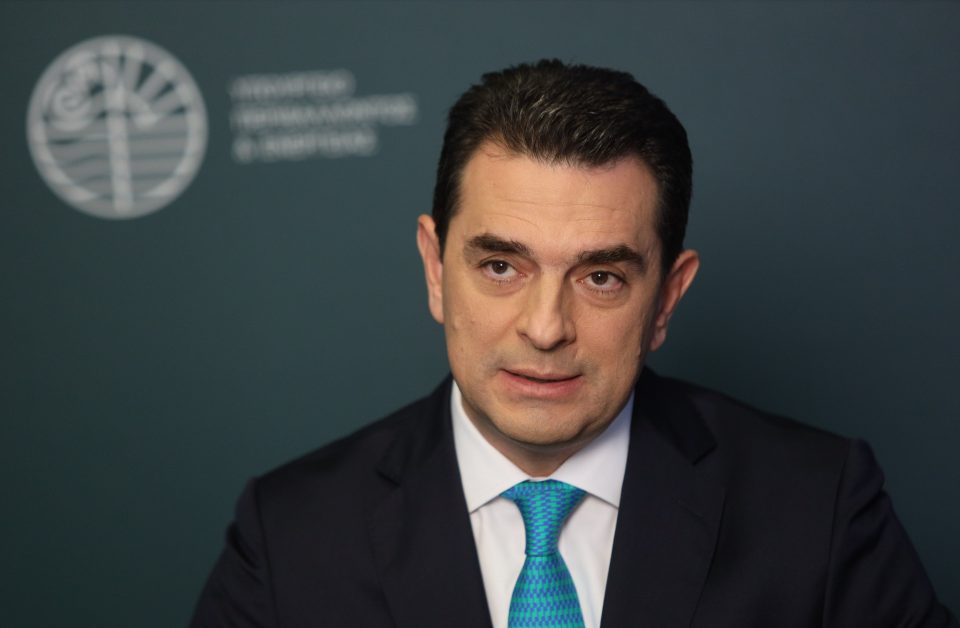
 Επιστολή με τις προτάσεις της Ελληνικής Κυβέρνησης για την αντιμετώπιση της διεθνούς ενεργειακής κρίσης, σε συνέχεια της πρότασης του Πρωθυπουργού, Κυριάκου Μητσοτάκη στο Ευρωπαϊκό Συμβούλιο στις 24 Φεβρουαρίου, απέστειλε ο Υπουργός Περιβάλλοντος και Ενέργειας, Κώστας Σκρέκας, στους εκτελεστικούς αντιπροέδρους της Ευρωπαϊκής Επιτροπής, Frans Timmermans και Margrethe Vestager, στον Επίτροπο για την Οικονομία, Paolo Gentiloni, στην Επίτροπο Ενέργειας, Kadri Simson και στην Υπουργό Οικολογικής Μετάβασης της Γαλλίας και Πρόεδρο του Συμβουλίου Υπουργών Ενέργειας, Barbara Pompili.
Ο Υπουργός Περιβάλλοντος και Ενέργειας προτείνει τη δημιουργία ενός ευρωπαϊκού Μηχανισμού Αλληλεγγύης για την ενεργειακή κρίση – EU Energy Crisis Solidarity Facility (ECSF). Όπως τονίζει, η Ευρωπαϊκή Ένωση πρέπει να προχωρήσει συλλογικά και αποφασιστικά στη λήψη έκτακτων μέτρων για την αντιμετώπιση των επιπτώσεων από τις μεγάλες ανατιμήσεις στο κόστος ενέργειας σε νοικοκυριά και επιχειρήσεις. Ο σκοπός του ευρωπαϊκού Μηχανισμού Αλληλεγγύης είναι να στηρίξει τους Ευρωπαίους καταναλωτές, ιδίως τους πιο ευάλωτους και να περιορίσει την επιβάρυνση των οικονομιών των Κρατών Μελών από την ενεργειακή κρίση, η οποία εντείνεται από την εισβολή της Ρωσίας στην Ουκρανία.
Πως θα λειτουργεί ο Μηχανισμός ECSF
- Η Ευρωπαϊκή Τράπεζα Επενδύσεων (ΕΤΕπ) θα δημιουργήσει έναν Μηχανισμό Αλληλεγγύης για την ενεργειακή κρίση, έπειτα από αίτημα της Ευρωπαϊκής Επιτροπής.
- Τα Κράτη Μέλη θα έχουν τη δυνατότητα λήψης χαμηλότοκων δανείων από τον ECSF για τη χρηματοδότηση μέτρων αντιστάθμισης των επιπτώσεων από τις υψηλές τιμές ενέργειας.
- Το ύψος της χρηματοδότησης θα καθορίζεται από την κατανάλωση ενέργειας ή από τα ετήσια έσοδα των πλειστηριασμών δικαιωμάτων εκπομπών αερίων του θερμοκηπίου του κάθε Κράτους Μέλους.
- Με απόφαση του Ευρωπαϊκού Συμβουλίου, τα δάνεια δεν θα υπολογίζονται στο έλλειμμα και το δημόσιο χρέος των Κρατών Μελών.
- Η αποπληρωμή των δανείων θα γίνεται σε μία περίοδο 12 έως 15 ετών με τη λήψη μέτρων που θα αποφασίζει το κάθε Κράτος Μέλος. Στα μέτρα θα μπορούσαν να συμπεριληφθούν τα μελλοντικά έσοδα από πλειστηριασμούς δικαιωμάτων ρύπων και η επιβολή εισφοράς στην κατανάλωση ενέργειας.
Τα Κράτη Μέλη θα έχουν δύο επιλογές για την αξιοποίηση των πόρων του ECSF:
Επιλογή Α
- Να επιδοτήσουν τους λογαριασμούς ηλεκτρικής ενέργειας και φυσικού αερίου των νοικοκυριών, με προτεραιότητα στους οικονομικά ασθενέστερους και εφαρμόζοντας κοινωνικά κριτήρια.
- Να επιδοτήσουν τους λογαριασμούς ηλεκτρικής ενέργειας και φυσικού αερίου των επιχειρήσεων, με έναν ενιαίο τρόπο.
- Να παρέχουν φθηνά κεφάλαια στις επιχειρήσεις, ιδιαίτερα σε εκείνες που είναι περισσότερο ευάλωτες λόγω των κυρώσεων εναντίον της Ρωσίας και του πολέμου στην Ουκρανία.
- Να παρέχουν χαμηλότοκα δάνεια στις επιχειρήσεις για τη χρηματοδότηση συμβολαίων αντιστάθμισης των υψηλών τιμών με προμηθευτές ενέργειας.
- Να αυξήσουν τις επιχορηγήσεις για έργα ενεργειακής αποδοτικότητας, ΑΠΕ και διαφοροποίησης του ενεργειακού μείγματος.
Επιλογή Β
Τα Κράτη Μέλη θα μπορούν να αξιοποιήσουν τους πόρους του ECSF για να επιδοτήσουν μέρος των συμβολαίων στη χονδρεμπορική αγορά ηλεκτρισμού.
Ειδικότερα:
- Η χονδρεμπορική αγορά ηλεκτρικής ενέργειας θα συνεχίσει να εφαρμόζει τους υφιστάμενους κανόνες που βασίζονται στην οριακή τιμή.
- Ωστόσο, τα Κράτη Μέλη θα καθορίζουν ανώτατα όρια για την αποζημίωση της κάθε τεχνολογίας παραγωγής ενέργειας. Τα Κράτη Μέλη θα υπολογίζουν, επίσης, το κόστος καυσίμου για κάθε τεχνολογία παραγωγής ενέργειας. Σε περίπτωση που το κόστος καυσίμου είναι ακριβότερο από την ανώτατη αποζημίωση, ο παραγωγός θα λαμβάνει τη διαφορά.
- Οι προμηθευτές ηλεκτρικής ενέργειας θα εποπτεύονται από μηχανισμούς παρακολούθησης της αγοράς, προκειμένου να διασφαλιστεί ότι οι καταναλωτές θα λαμβάνουν την έκπτωση που τους αντιστοιχεί.
- Το κόστος της κρατικής επιδότησης στους παραγωγούς ηλεκτρικής ενέργειας θα χρηματοδοτηθεί από τον ECSF.
Στην επιστολή του, ο Έλληνας Υπουργός Περιβάλλοντος και Ενέργειας προτείνει επίσης τα εξής:
- Η Ευρωπαϊκή Ένωση θα πρέπει να αναθεωρήσει την πολιτική της για την ενεργειακή ασφάλεια και τη διαφοροποίηση πηγών και οδεύσεων.
- Οι επενδύσεις που αφορούν στην ανάπτυξη στρατηγικών υποδομών αποθήκευσης ορυκτών καυσίμων και θα ενισχύσουν την ενεργειακή ασφάλεια της Ευρώπης, θα πρέπει να είναι επιλέξιμες για χρηματοδότηση από ευρωπαϊκούς πόρους και δανεισμό από την ΕΤΕπ.
- Το ίδιο θα πρέπει να ισχύσει και για άλλες ενεργειακές επενδύσεις που θα ενισχύουν την αμυντική ικανότητα της Ευρώπης (π.χ. ενεργειακή αποδοτικότητα στρατιωτικών υποδομών, οχημάτων κλπ).
- Η διαθέσιμη ευρωπαϊκή χρηματοδότηση θα πρέπει κατά προτεραιότητα να διατεθεί για την υλοποίηση ενεργειακών διασυνδέσεων με τρίτες χώρες (π.χ. διασύνδεση της Ευρώπης με την Αφρική ή τη Μέση Ανατολή).
- Ms Barbara PompiliFrench Minister for Ecological Transition
Chair of the Energy Council
Mr Frans Timmermans
Executive Vice-President for a European Green Deal
European Commission
Ms Margrethe Vestager
Executive Vice-President for a Europe Fit for the Digital Age
European Commission
Mr Paolo Gentiloni
Commissioner for Economy
European Commission
Ms Kadri Simson
Commissioner for Energy
European Commission
Dear Minister,
Dear Executive Vice-Presidents, Dear Commissioner,
The continuous rise in energy prices over the past year, due principally to natural gas and other hydrocarbons, had already reached a critical point before the illegal Russian invasion of Ukraine. Now, the rise in energy prices has entered a qualitatively new phase, which risks getting completely out of control unless we take immediate and decisive measures.
We should take as an example the way we handled the pandemic. By taking decisive action at the beginning of the crisis we averted economic collapse and ensured swift economic and social recovery.
In this regard, we would like to propose the following:
- The EU should take decisive collective action to address the energy crisis
On a national level, all Member States have made tremendous efforts, taking advantage of the flexibility offered by the toolbox prepared by the Commission, but paying an excessive fiscal cost in order to alleviate the additional burden for the most vulnerable households and businesses.
However, dealing with the problem on an individual basis is not a sustainable way forward. The prolongation of the crisis in Ukraine will have significant cost for all EU Member State economies, industries and consumers. Furthermore, it will inevitably lead to severe distortions in the Single Market, creating a multi-speed Europe that will undermine our joint efforts to reach our ambitious collective climate targets. Already the confidence of our citizens in our energy policy has been shaken.
We all agree that the green transition and the implementation of the Fit for 55 package constitutes the only way forward in order to reduce EU’s dependencies from fossil fuels and those third countries, which use energy as geopolitical leverage against EU’s security and strategic autonomy.
Furthermore, we all agree that accelerating the green transition is the real solution to achieving price stability and increasing our resilience and strategic autonomy in face of severe geopolitical shocks such as the Ukraine crisis.
We need to use this consensus as leverage to find a collective EU solution to the current crisis.
In this light, as mandated by the European Council on Thursday, we urgently need a contingency plan to mitigate the impact of protracted crisis on households, businesses and consumers in the short and medium term.
We therefore propose the establishment of an EU Energy Crisis Solidarity Facility (ECSF) that will have a twofold objective. The first objective should be to provide temporary assistance to Member States to help repair the immediate damage caused by the explosion of energy prices, while limiting the impact on national budgets. The objective should be to keep momentum high towards the implementation of the Green Deal and the acceleration of investments in renewables, that will mitigate the negative impact of high gas prices in the medium term and reverse the need to further activate the ECSF.
We believe that if the proposed instrument effectively alleviates the budgetary burden for Member States, offering a more sustainable and EU coordinated approach, it will enhance our resilience and enable the EU to face the threat to European stability posed by the illegal Russian invasion in greater security and without the threat of severe budgetary or economic consequences to industry and households.
- Details of the proposed Energy Crisis Solidarity Facility (ECSF)
- The European Council invites the Commission and mandates the European Investment Bank to create an Energy Crisis Solidarity Facility (ECSF).
- The EU Member-States can get low-interest loans from the ECSF to finance costs of state intervention aiming at alleviating the impacts of the energy price crisis.
- Each EU MS has the right to get funding from the ECSF up to a quota, defined in proportion to national energy conception or to EU ETS national revenues.
- Following a decision of the Council, the loans are specifically exempted from government fiscal targets with respect to the deficit and the overall public debt
- The EU MS serve the loan amounts during a period of 12 to 15 years through measures decided at their discretion, including future revenues from the EU ETS auctions, special levies applied to energy consumption and others.
Option A:
The loan amounts can be used at the discretion of the EU Member-States, to finance the following one or several of the following subsidization:
- Subsidize electricity and natural gas bills of households with priority given to low-income households and social criteria
- Subsidize electricity and natural gas bills of enterprises by applying a uniform rate of subsidy
- Provide cheap working capital loans to enterprises particularly vulnerable to the sanctions against Russia and the war in Ukraine
- Provide cheap capital loans to businesses to finance price hedging contracts with energy suppliers
- Increase subsidies to investment in energy efficiency, renewables and diversification of the energy mix
Option B:
The loan amounts can be used at the discretion of the EU Member-States, to finance the costs of compensations derived from the application of regulated money transfers in the financial settlement of wholesale electricity markets:
- The wholesale electricity markets continue to apply the existing market-clearing rules based on the marginal cost (most expensive offer needed to meet demand). Therefore, the merit order, balancing and cross-border trade remain unchanged.
- However, for the financial settlement of the wholesale market, instead of remuneration based on marginal market prices, the state defines upper limits to the remuneration (EUR/MWh) separately for each category of power generation resource. The state also estimates the fuel cost of each power generation resource, and in case the fuel cost is higher than the capped remuneration, the state compensates the owner for the difference.
- Market monitoring and verification procedures ensure that the electricity suppliers pass through to consumer prices the reduced electricity costs due to capped remuneration
- The loans from the ECSF serve to finance the costs of the compensations provided by the state to electricity generators
Other Proposals
The EU should review its policy towards energy security and diversification. For example:
- Energy security Investments in strategic fossil fuel storage facilities should be eligible again for EU structural funds and EIB loans
- Eligibility should be equally extended to other defense energy-related investments (e.g. energy efficiency of military facilities, vehicles, etc.); and
- EU budget resources should prioritize energy interconnection projects with third countries (e.g. interconnections of Europe to Africa or the Middle East).
I am looking forward to discussing this approach with you and with our colleagues in Monday’s extraordinary Energy Council,
Yours sincerely,
Kostas Skrekas